

The Swiss-born multi-instrumentalist Sylvain Fournier welcomed Ana in his home studio, and wholeheartedly shared his world of percussions and precautions against all things fake.
To talk to Sylvain is to experience Microsoft’s Encarta Encyclopedia World Music Tour in the late 90s—only with greater joy and without the corrupted files.
To visit his home is to understand who he is—there are layers.
I had the privilege of meeting him, and as modest and sincere as he is, there is both a wild child beneath the calmness and a serious, professional jazz drummer.
I learned what inspires him, how he ended up working full-time as the owner of his childhood dream, and what it means to live up to your principles—even if that means sometimes declining an invitation to play overseas due to environmental concerns.
Enjoy.
ZEBRAS AND MAGPIES: Who is Sylvain? You’re a percussionist, but also a bit more than that. What do you do? What do you love? Let us know more about you.
Sylvain: I’m a Swiss guy born in Geneva, and since childhood I used to drum on just about anything, haha. I “played” on my bed while listening to Iron Maiden, Metallica, and Slayer.
My parents didn’t want to buy me a drum set, of course, because we lived in an apartment and it wasn’t convenient.
So, I started learning the marching drum in the local commune and I got some technical skill from that. Fortunately, there was also a drum set at the place where I took those lessons, and I was able to spend time practicing whenever I could.
Little by little, I saved enough money to buy my own kit—a huge heavy-metal drum set with two bass drums. Quickly after that, I started playing speed metal.
Z&M: So your roots are in metal—more specifically, speed metal?
Sylvain: Yes. My sister listened to French pop singers, and at the time I thought it was boring—just radio music. Then I discovered something completely different: music with energy, intensity, and power. I remember thinking, “Ah, this is interesting!” That’s what attracted me to metal in the first place.
Z&M: What was your first band? When did you start playing?
Sylvain: It was a thrash/speed metal band. I think I was around 12 years old. The guys in the band were much older than me—around eighteen. At that time, there weren’t really many metal drummers in Geneva, so they said, “Let’s take this little guy.” (laughs)
That’s how I started playing music seriously. But I never wanted to go to a conservatory or follow a formal musical education. Traditional schooling wasn’t really my thing.
Z&M: How did you go from listening to and playing speed metal to exploring so many other genres?
Sylvain: Over time I started listening to different kinds of music—Frank Zappa, Brazilian music, Indian music. It was a shock. Suddenly I realized there were completely different musical worlds out there, and since then, I enjoy discovering other aesthetics. You go to a place and there is something you never heard, and it’s…How can I say this? It’s like a perfect thing. It’s because it took years and years to become what it is. It’s fantastic.
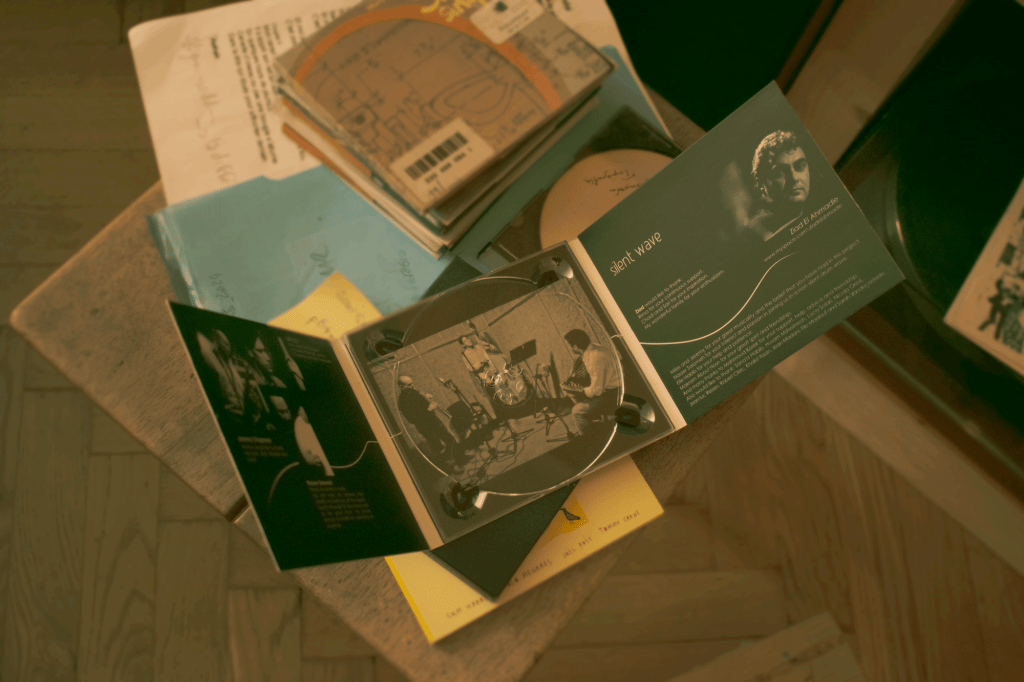
Again, I’ll give Indian music as an example. They’ve been playing it for centuries, and it’s going to a degree of perfection. Suddenly you just discover a fantastic new world. And with many kinds of music it’s like that. And sometimes this happens to you again, sometimes a little bit less, because after some time, you start to know quite many things, but still—there is always a new thing that leaves you in awe.
Z&M: What did you do before becoming a full-time musician?
Sylvain: I learned a trade as an advertising painter—you know, making signs for shops, butcheries, bakeries, things like that. I did it because my parents wanted me to have a profession. So I completed my diploma and worked for about a year and a half, part-time, in that field. But eventually I ended up doing only music.
Z&M: So you got to do what you love for a living?
Sylvain: Yes, but I didn’t really plan it. A friend of mine asked if I could replace him in a band. He was playing with his father, who was a famous children’s singer. I said, “Yeah, why not?” and suddenly I found myself touring across Switzerland, France, Belgium, and Canada.
I still had part-time jobs to pay the bills. But after a while people started telling me, “You have to be available,” and I realized I had to make a choice. So I thought, “Maybe I should give music a try.”
Z&M: Do you remember the first time you played in front of an audience?
Sylvain: Of course. It was at a school in Geneva with my speed metal band. It was great fun—very exciting, a real thrill. Not every concert was perfect, though. Some gigs were terrible. People would throw beer at us, and afterwards I’d think, “Great, now I have to clean my whole drum set.” (laughs)
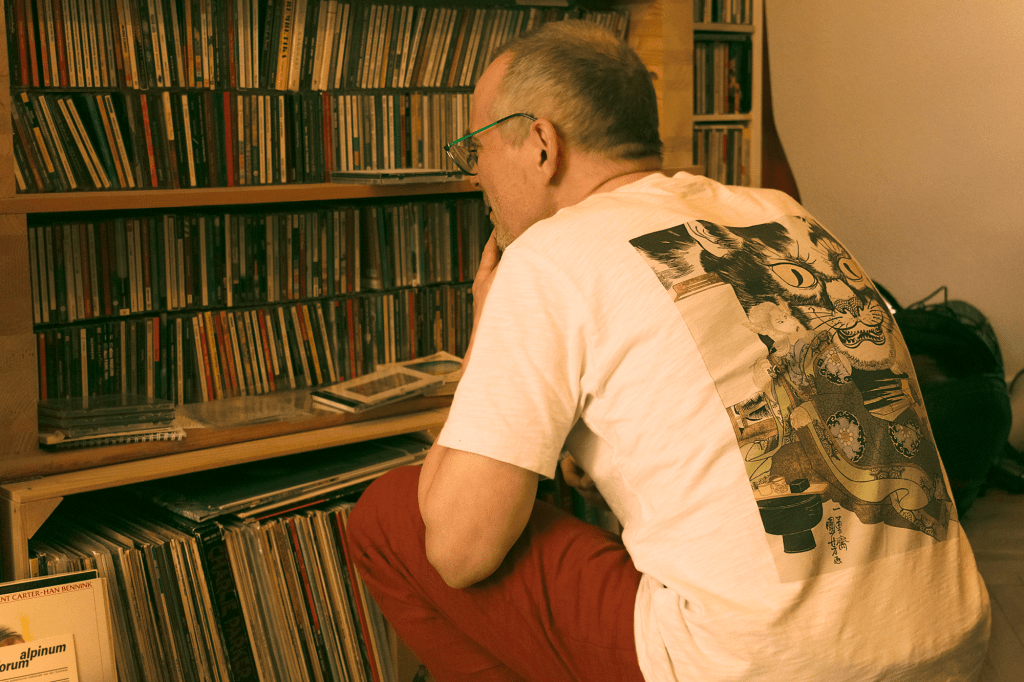
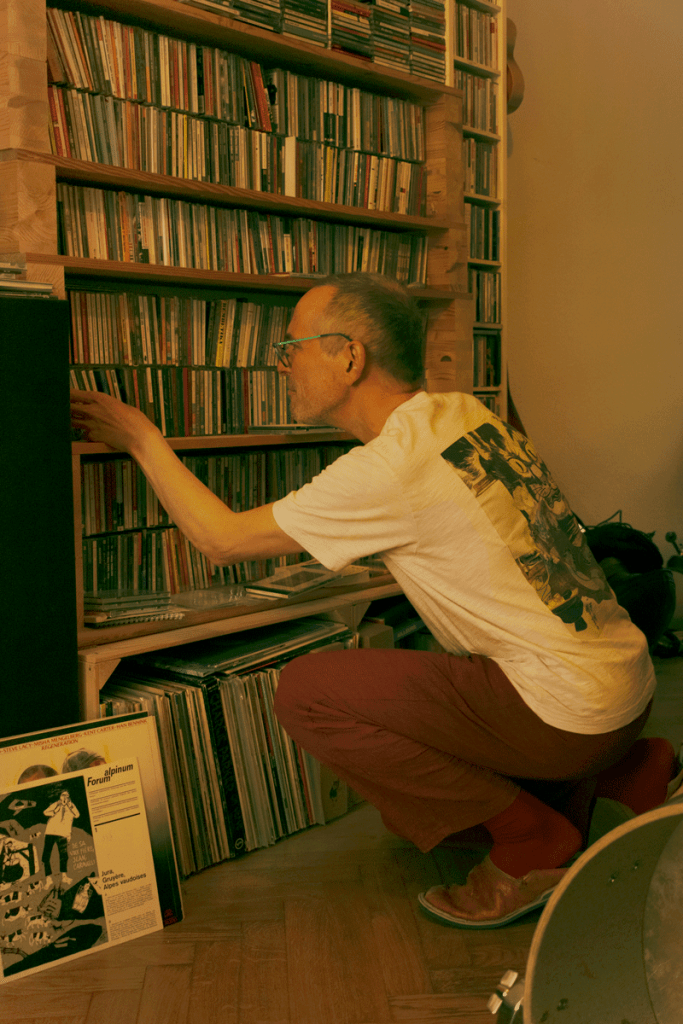
Z&M: What’s the story behind your collection of CDs and LPs? When did it all start? Did you intentionally collect all of that, or was it more like, “Oh, I like this, I’ll buy it”?
Sylvain: Well, at first there was no internet. If you wanted to listen to music, you had to go to a record shop. That’s how I bought my first records.
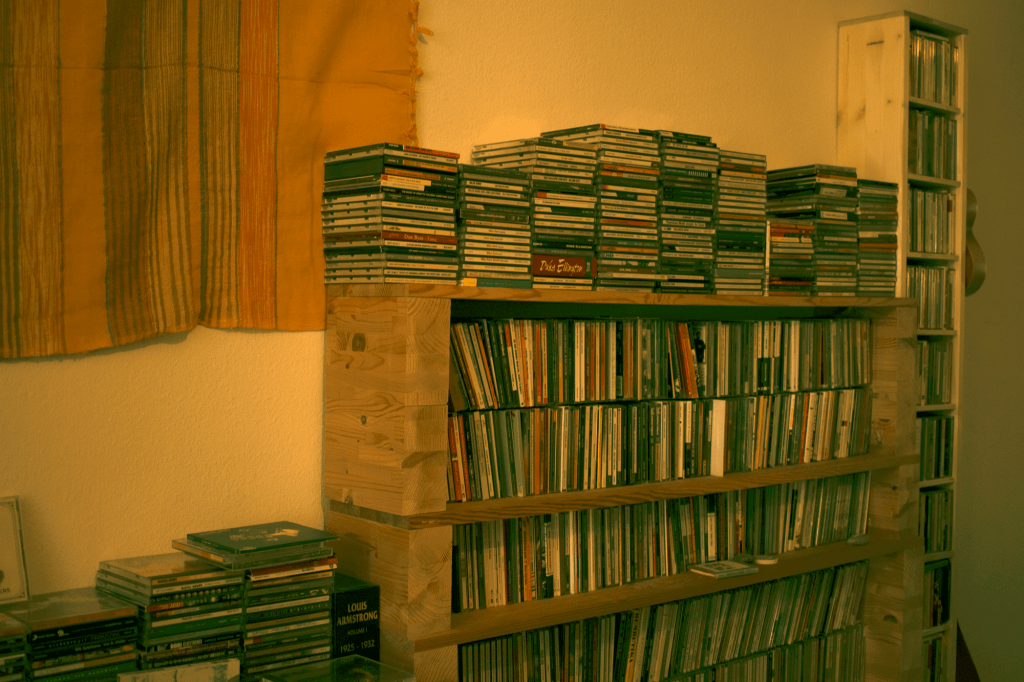
I’ve always been very curious. I like going into a place and searching for hidden treasures. You find an artist you’ve never heard of before, discover that they played with another musician, and suddenly a whole new world opens up. I find that very interesting.
Most of my CDs come from second-hand shops. Not all of them, of course. When there’s a group I really like, I prefer to buy directly from the musicians so they get the money. I also try to buy second-hand for ecological reasons. I love listening to CDs, but they’re made of plastic, and that’s something I’m conscious of. So whenever possible, I prefer to give existing copies a second life rather than buy new ones.
Z&M: We seem to share some values, so I’d like to ask you something beyond music. I noticed that you surround yourself with natural materials—linen, cotton, wood. It may sound like an unusual question, but do you find a connection between music and nature? Is nature one of your sources of inspiration, whether in your lyrics, your music, or your everyday life?
Sylvain: Yeah, of course. Walking in the countryside or in the mountains gives me a lot of ideas. I also try to live in a way that reflects those values. I prefer wood whenever possible. Metal isn’t always very ecological, and I try to avoid plastic things. If I do buy something made of plastic, it’s usually second-hand. In an ideal world, we wouldn’t need to think about these compromises.
For me, it’s an interesting challenge to try to live more ecologically as a musician because musicians have to travel. I know many musicians I admire who take planes every two or three days—sometimes hundreds of flights per year. I couldn’t do that. My partner is Japanese, so sometimes we travel to Japan to visit her family.
Of course I’m happy to go somewhere and meet people, but I always think about the environmental impact. Sometimes friends invite me to play somewhere far away—Chile, for example. It sounds wonderful, but travelling to the other side of the world for just a few concerts is difficult for me to justify. The last time I had an opportunity like that, I didn’t go because I didn’t want to fly.
Z&M: You mentioned that you perform for both adults and children. Is the energy different? Children often bring a certain innocence and spontaneity. Does something change in you when you play for young audiences compared to adults?
Sylvain: Of course it’s different. Children are very reactive, and that’s a lot of fun. They say exactly what they’re thinking, and sometimes it’s completely unexpected or very funny. There is a spontaneity that I really like. They’re also incredibly enthusiastic. For many of them, it’s their first concert experience. They watch with big eyes and a lot of excitement, and that’s something special to see.
Z&M: That’s wonderful. When you think about it, you were once that child yourself—the kid going to a first concert, discovering live music for the first time. Now you’re the person on stage. Somewhere in the audience there may be an eight- or nine-year-old who will remember that performance years later and say, “That was my first concert.”
Z&M: I know it’s difficult to choose, especially with so much music in your soul, but can you choose one or several favorite artists or bands?
Sylvain: No, not really. It depends. One day it’s one genre, other days it’s another. Some periods I am into something much, much different, as in, I want to listen to music from Pakistan, so I go a bit more deeply into their music. And it’s nice.
Now, I would say, I prefer acoustic music. You can unplug and you can still play music, right? But sometimes I like to listen to some electronic stuff because I don’t know much about it, but something about it just hooks me.
As long as it’s good music, I’m open to listening to it.
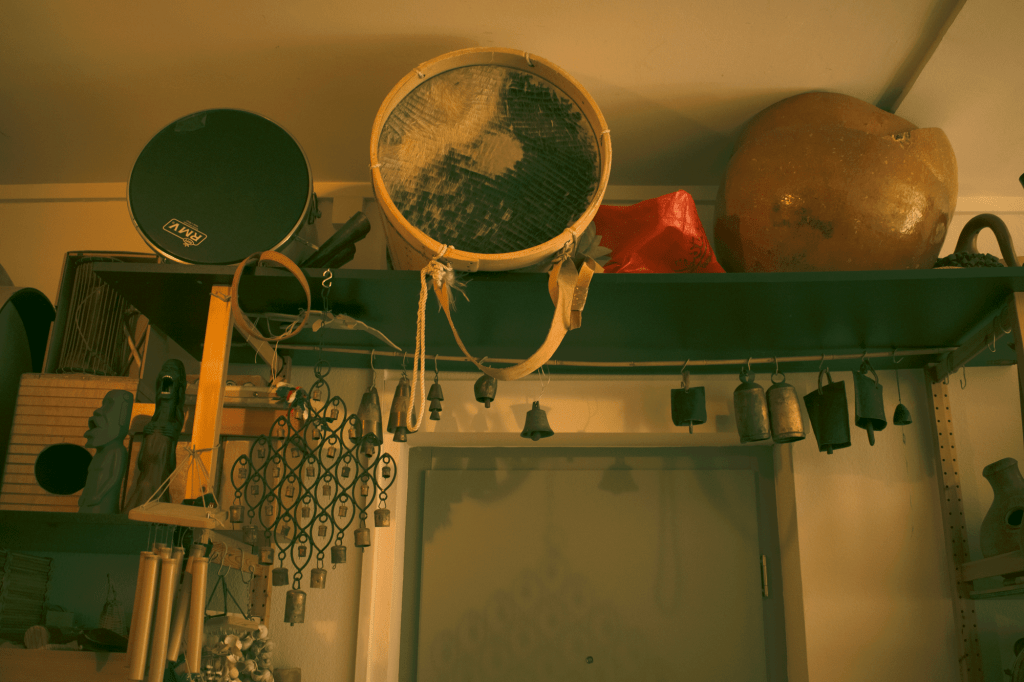
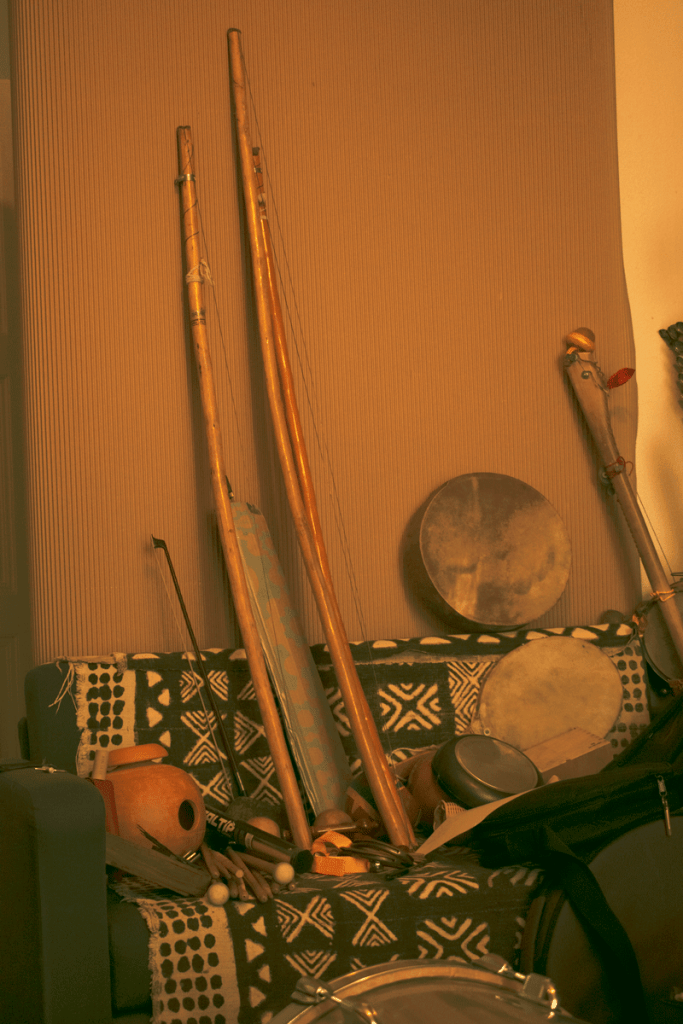
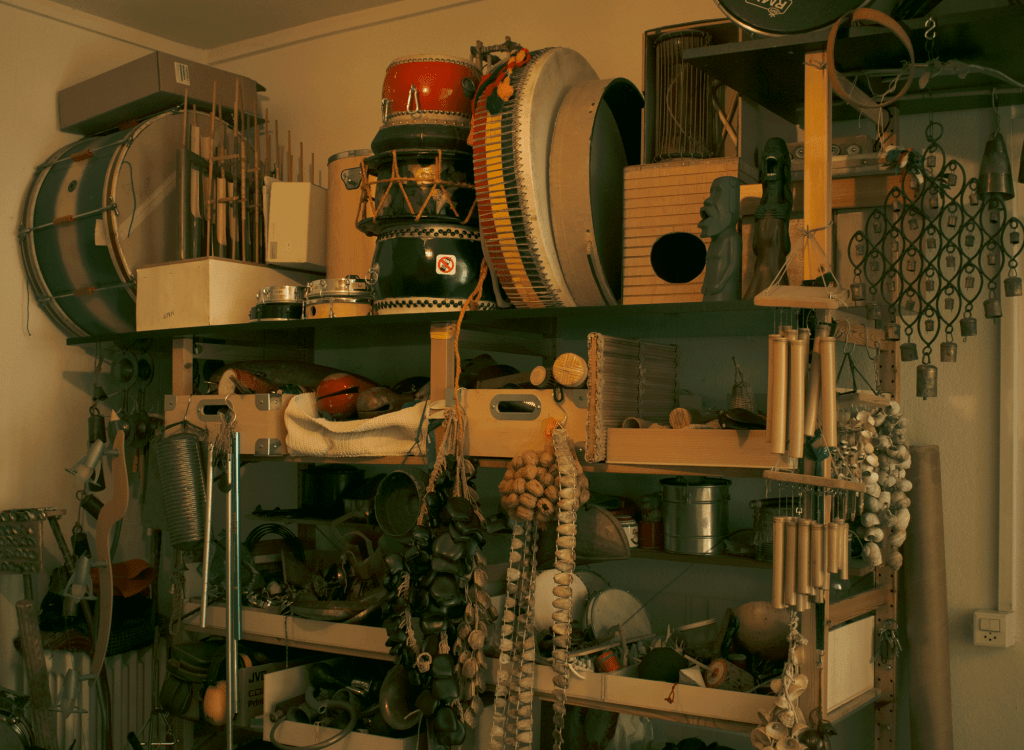
Z&M: You have so many instruments here. What is their history? Do you play other instruments besides drums?
Sylvain: The drum set is my first instrument. But as I started listening to different kinds of music, I became fascinated by other percussion instruments. I remember seeing someone playing a hand drum, like this one.
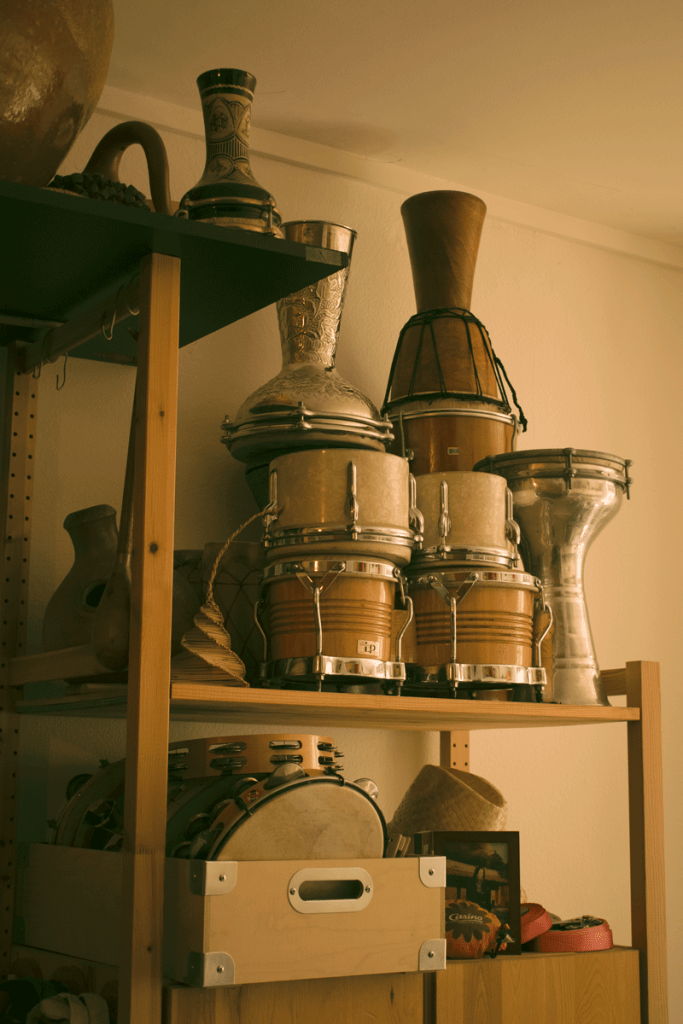
Z&M: A darbuka? We call it a tarabuka.
Sylvain: Exactly. I really wanted to learn, so I asked fellow musicians to show me how to play and I took a few lessons. What’s funny is that this particular instrument came from the garbage. The skin was broken, but I replaced it, repaired it, and now it sounds very nice. It was actually in the aluminum recycling section.
I have found several instruments like that. It’s crazy sometimes. People have enough money that when they get tired of something, they simply throw it away. If you’re lucky, you find it before the collection truck arrives.
Z&M: I see many communities here in Geneva that care about sustainability, repairing things, reducing waste, and buying second-hand. Are you involved in any of those initiatives?
Sylvain: I’m not part of an association, but I try to talk with people about these things.
I even live without a mobile phone because I don’t think I need one. People often ask me how that’s possible, but it is—no problem. Some musicians think they have to be reachable every second of the day, but we’re not living in New York or Paris. Everything doesn’t have to happen immediately. Of course, I use a computer and it’s very useful. But sometimes I go outside and see everyone walking with their noses in their phones. It feels like science fiction. Honestly, I find it a bit frightening.
Z&M: What is the story behind the Balkan folk music cassette?
Sylvain: Ah, yes. That’s probably twenty-five or thirty years old. It’s music by Ivo Papazov. I went to Bulgaria with two friends because we loved Bulgarian music. At that time cassettes were everywhere, so we bought a lot of them.
Of course, physical recordings take up space, but I still prefer them. Nowadays almost everybody says, “Oh, Spotify is perfect.” I don’t think so. I don’t know if you’ve heard about the movement called “**** Spotify.”
Z&M: No, but I know a lot of people have issues with it. (laughs)
Sylvain: Well, they don’t pay artists. And now there is another problem: AI. Many copy the voices of singers and imitate musicians—old pianists, jazz musicians, all kinds of artists—and create new music in their style. Then they create fake names or misleading usernames.
For me, it’s almost the disappearance of the artist.
The biggest artists can probably defend themselves because they have the money to take legal action. But many others can’t. A friend of mine told me he was looking for recordings by a jazz singer he liked. She had already passed away, yet there was supposedly “new” music released under her name. The credits made no sense—she was suddenly listed as playing saxophone, and the composer had a completely unrelated name. It’s all done to generate money and attract listeners by using names people already know.
I don’t like that at all.
Z&M: If you had to recommend a listening list to our readers, where would they begin? Maybe not individual songs—that’s too difficult—but ten albums, artists, or records that have stayed with you over the years.
Sylvain: That’s a difficult question because it changes all the time. Right now I’ve been listening to Punch Brothers. It’s bluegrass, but at a very high level.
I like music that surprises me. I also listen to a lot of Brazilian music. One musician I would recommend is Hermeto Pascoal. He actually passed away a few months ago, but he was almost ninety and lived a very rich life. I discovered his music about forty years ago, when I was learning to be an advertising painter. One of the guys I worked with said, “Check this out, it’s very nice.”
And that was my first encounter with Hermeto’s music.
Another record I would recommend is The Tiny Bell Trio by Dave Douglas. He is an American trumpet player. It’s an older album, from the early 1990s, but I think that period of his work was especially inventive and original.
Of course, there is Thelonious Monk. If possible, don’t just listen but try and find some videos, watch him play. He looks completely hypnotized at the piano. He had these enormous hands and played in a way that seemed strange and original, but it was very original.
Ah, of course. One of my favourites is Kurt Weill. He was a German composer. Almost every time I listen to his music, it makes me cry. There are certain parts where I already know I’m going to cry. It’s funny because, in a way, his music can seem quite angular, almost square, but the melodies are fantastic.
What he did was not “experimental” music but very innovative and full of beautiful, unexpected ideas. The music is incredibly moving.
Ennio Morricone. I have two large box sets of his work at my girlfriend’s place, with dozens of recordings. I would recommend exploring his music in general, especially the period from the 1960s and 1970s.
Ah, something weird that I don’t listen to everyday, because it can be a bit too much. (laughs). But give it a chance. Vrresto by Ruins, a Japanese group that played incredibly complex music with wild energy. They sang in falsetto voices and created something completely unique.
I love traditional music as well. Pygmy music is fascinating to me. There are musical traditions that have developed over centuries, and when you discover them you realize how rich and sophisticated they are.
Then, I love Gerri Allen. Specifically, her album The Life of a Song.
Another musician I admire is Aki Takase, a Japanese pianist who lives in Germany. Her work combines jazz with a very personal approach. Some of her collaborations include turntables and other unexpected sounds, which creates something special.
I also listen to Nils Wogram’s band Root 70. What I like about them is their use of microtonality. It reminds me of some of the musical ideas you find in Arabic traditions.
And of course, I have always loved music from the Balkans; there is so much depth there. It isn’t always easy to find, but it’s worth the search.
The truth is that my favorites change constantly. One month I might be listening to jazz, another month to Pakistani music, another to traditional folk music. As long as it is good music, I am interested.
Z&M: What advice would you give to young aspiring musicians?
Sylvain: I think curiosity is the main thing. If you want to learn something, you have to be curious enough to explore it for yourself. Sometimes people say, “I want to learn music, so teach me how to play.” But they haven’t tried anything on their own yet. I find that a bit strange. It’s like saying, “I paid you, so now teach me everything.” Of course, teachers are important. When you reach a point where you don’t know how to do something, you ask someone for help. But first, you should try by yourself.
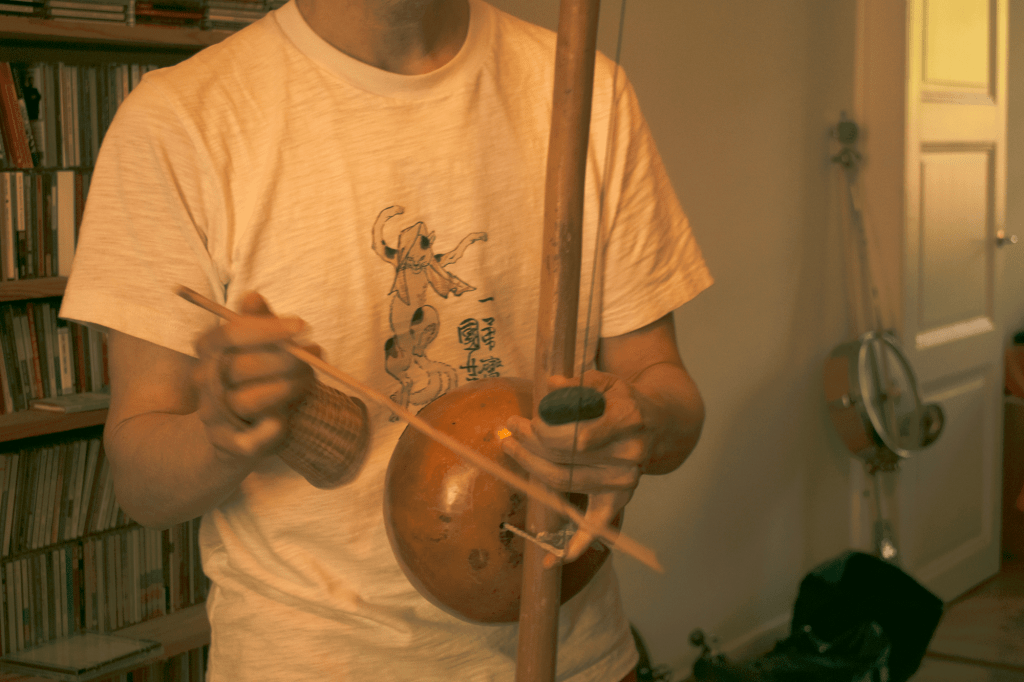
Sylvain playing a hand-made Brazilian berimbau
Explore. Experiment. Make mistakes. That way you discover things on your own, and sometimes you find a different path from everybody else. You do it your way, and that’s interesting.
So my advice would be: stay curious and stay open to different people, different cultures, different ways of thinking, and different kinds of music. That’s how you keep learning.
Album of the day: Parasomnia by PrismE
Thought of the day: “Explore. Experiment. Make mistakes. That way you discover things on your own, and sometimes you find a different path from everybody else. You do it your way, and that’s interesting.” — Sylvain Fournier
Sylvain Fournier music and projects: https://foufoumusic.com/
Photos: ZEBRAS AND MAGPIES™ unless otherwise stated.
Interview conducted in May 2026.


Leave a Reply