

Can the contemporary carry the elegance of the timeless past?
Only if — not a conditional, but a factual term — it can respond with integrity to its predecessors.
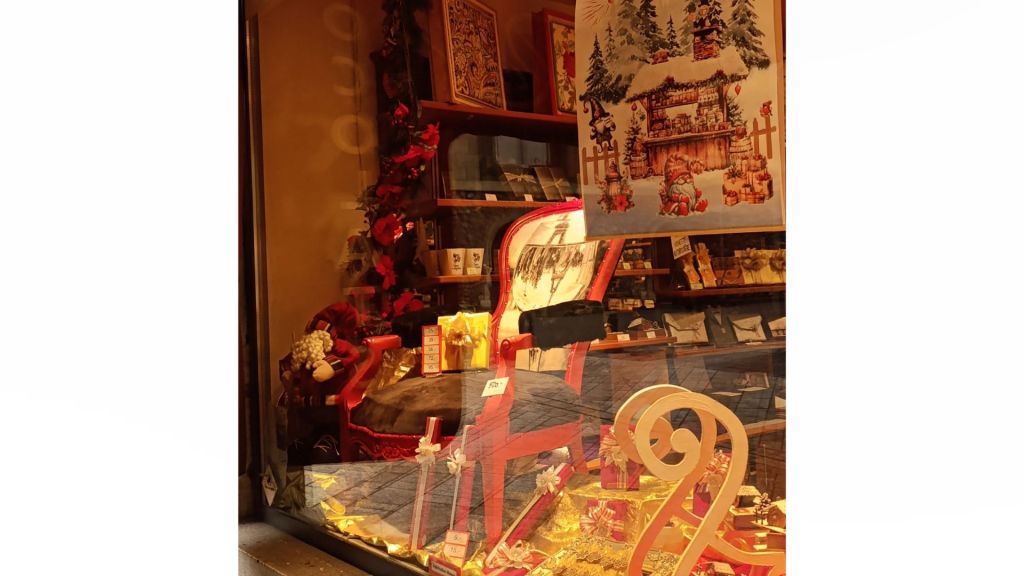
Some of my earliest memories of chairs are tied to three things: being caught in one, nearly smashing my head against a wall, and the heaviness of a traditional chair in our neighbors’ dining room.
These chairs had character. Presence. Almost a personality.
The first was a folding lounge beach chair, which I remember very vividly: a white metal-tube frame and thick, slightly coarse canvas with a striped pattern in pastel shades. I would sit in it with the unbothered dignity any child has when they own a cool chair in lavender purple, mint green, and pastel yellow stripes.
I am desperately searching for an old photo where I’m lounging in it. Until I find it, imagine Jerry lounging on the arm of a wooden beach chair, sipping on his lemonade.
During one early July siesta in front of our weekend house, I plopped myself into it and was caught off guard, stuck in its frame like a fly in a Venus flytrap. I never trusted that chair again the way I had before; one could almost say it changed its colors after that experience.
The second chair I remember clearly was part of our first dining room. It sat somewhere between traditional and mid-century modern: a black hardwood frame, long square legs coated in a smooth, shiny finish. If you slid your hand down the legs, you could feel tiny patches of roughness here and there. The seat and backrest were upholstered in dark gray fabric, patterned with thin white, tangerine, green, and purple interrupted lines.
I used to swing on that chair, testing how much movement it could tolerate, until one day gravity decided to participate. My parents told me to stop; I didn’t listen. That changed the day my father caught me mid-flight, just moments before the back of my head would have hit the wall.
The third set of chairs I remember belonged to our neighbors. They were traditional, with honey-maple hardwood frames and legs, and golden-sand beige upholstery on the seats and backrests. They were always the first thing I noticed, standing just as firmly as they had the last time I visited with my mother.
If these chairs could speak, they would narrate all the lives that had sat in them: summer evenings spent playing cards and guitar, arguing over Balkan politics and local parties, debating interethnic conflicts, exchanging recipes, discussing who last mowed the building’s shared yard—everything, all the way to family matters.
They could hear what no neighbor had the patience to hear while everyone was talking over each other. Unlike its guests, these chairs knew how to be still.
I appreciate that kind of work and craft. Bible-like, ancient-world-like quality. In chapter six of the first book of Kings, king Solomon builds the house of God by hiring the best craftspeople who hew and shape stones and timber using only the highest quality of these materials. He takes time to plan every single detail, every corner of each room and area. From doors to chambers and wall ornaments, he made sure everything is done with precision and reverence.
All of this taught me that to sit with full presence in a chair, one must trust not just its legs and back, but its carpenter too.
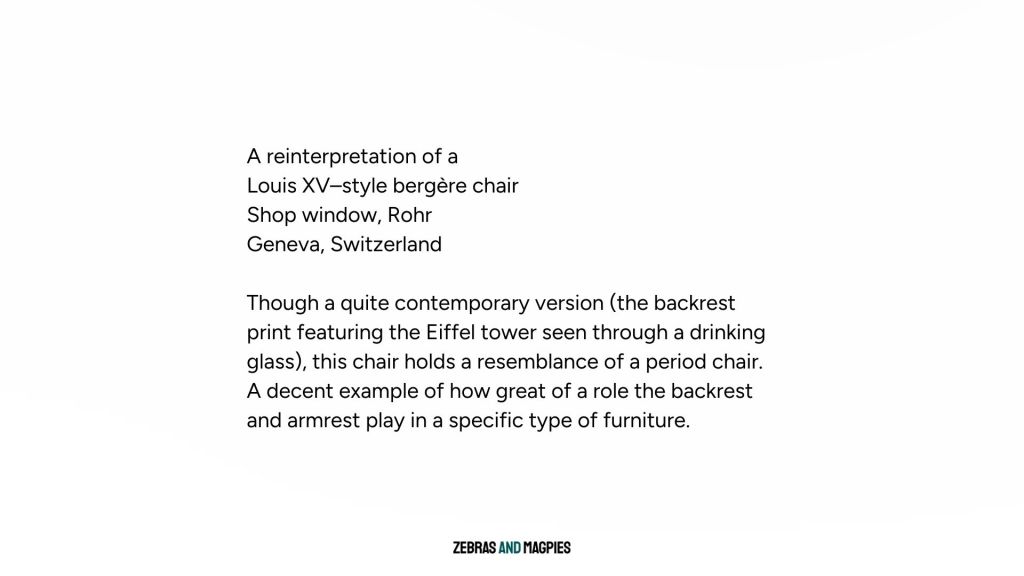
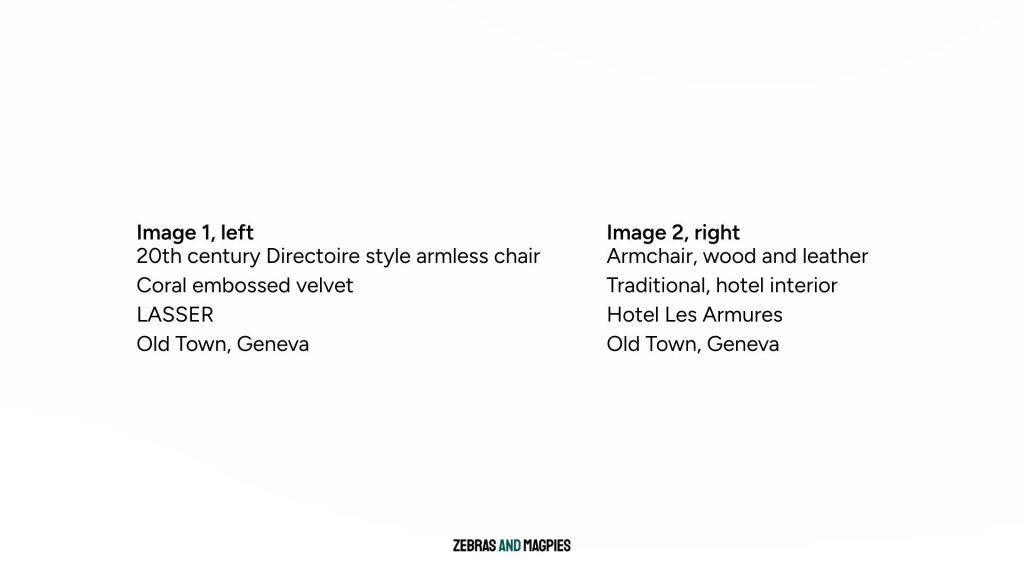
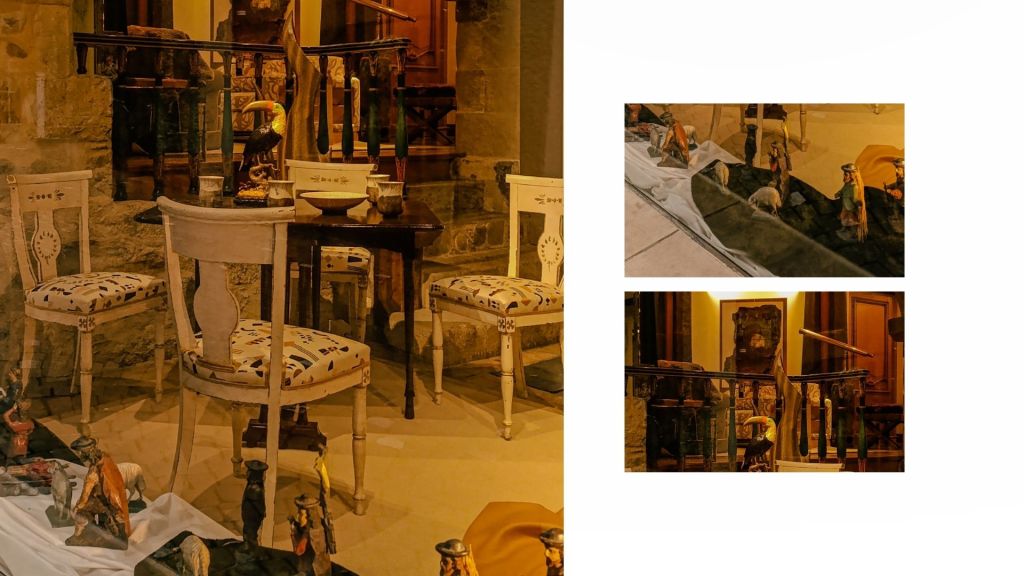
The last time I’ve been standing in awe in front of a furniture shop’s window, was in the Old Town in Geneva (see photos below).
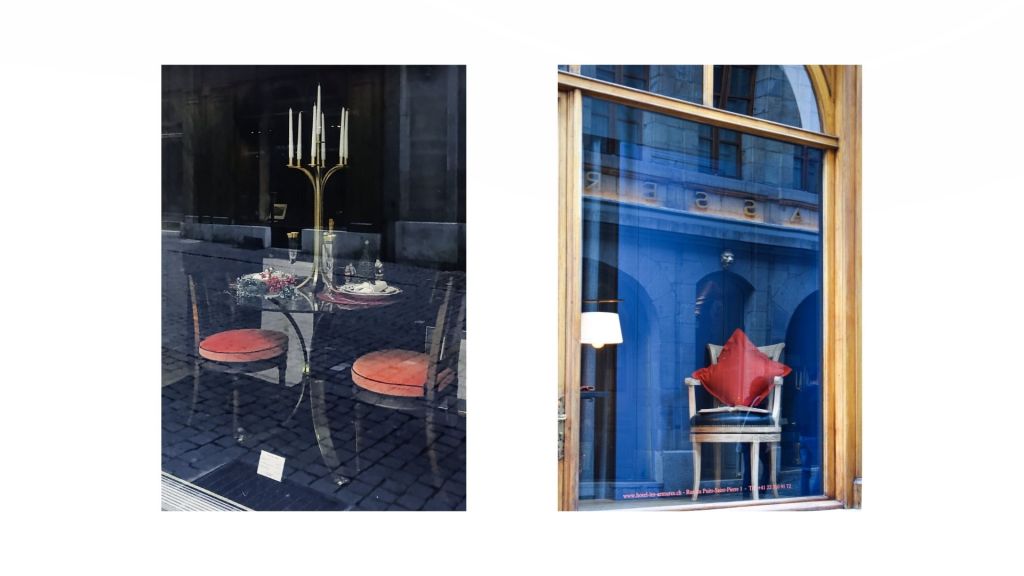

The last time I admired a restored chair was in the Klianti house in Plovdiv, Bulgaria. To be more precise, chairs. A few hours in the house are not enough to absorb all the beauty around; it’s curated cohesion at its best.
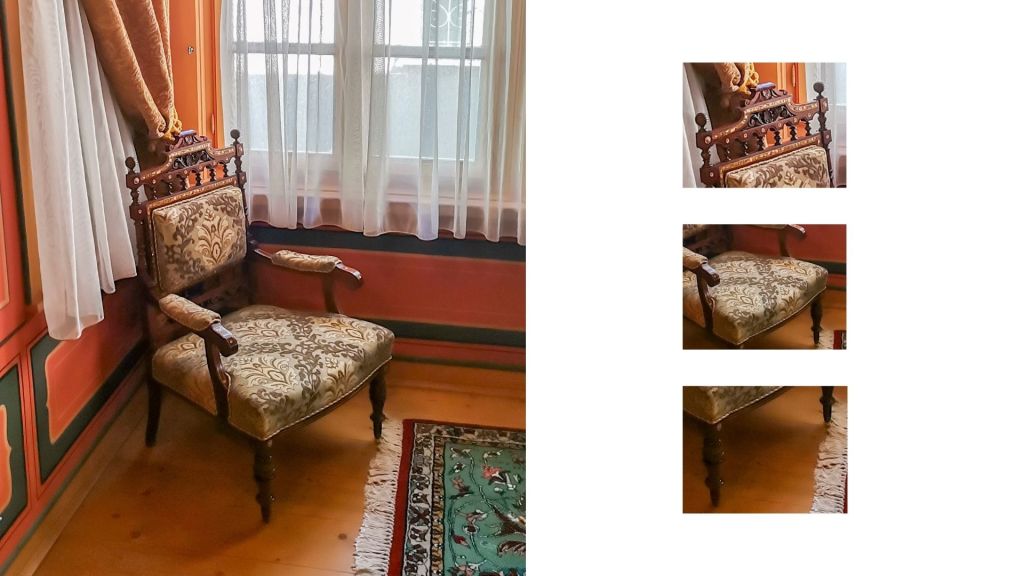
I think that every artist that worked on the restoration of the house, spent a decent amount of sleepless nights; not because of tiredness, but because of the thought that, for the next few years, they would spend their days in the house where the East and the West become one. Standing amidst the gorgeous rooms of the Klianti house, I was in awe; I studied the wall decorations — from Constantinople painted on one side to Vienna on the opposite, I traveled back to eighteenth century Plovdiv; a home to harmonious eclecticism. To me, that harmony was conveyed through the precise selection of chairs.
From Rococo, to Neo-Baroque, Neo-Renaissance, Oriental and heavy Central-European Neoclassical influence — all blended in one perfect revivalist whole, the chairs bear witness of many lives lived. The lives of carpenters, merchants, homemakers, happy children, visiting home doctors, travelers, historians, ethnographers, and probably twenty-first century restorationists: because, let’s be honest — who wouldn’t dare to think of sitting in a chair so perfectly made while giving its life back? Even to think of such action would count as sitting in it.
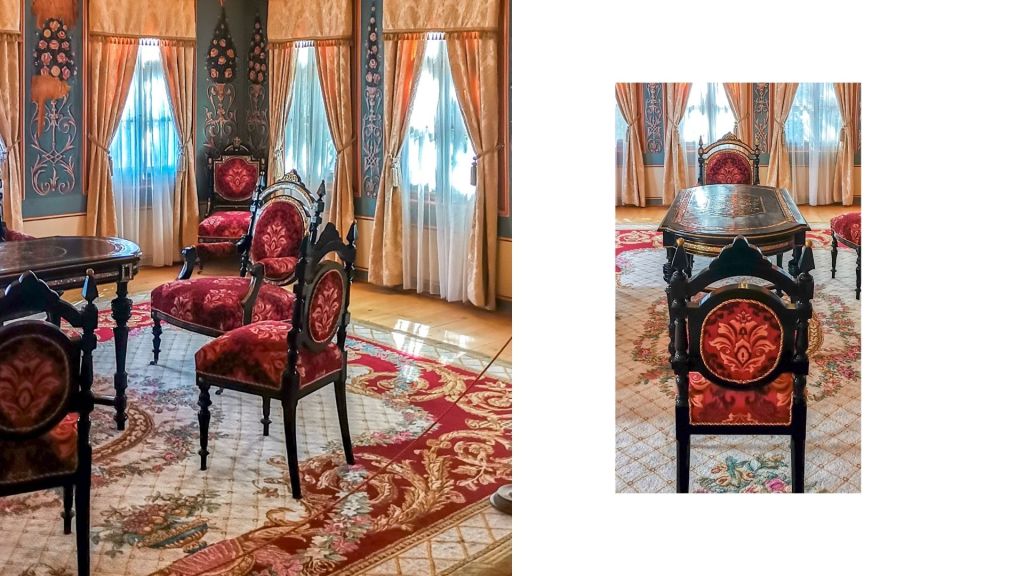
From Rococo to Neo-Baroque, Neo-Renaissance, Oriental, and heavy Central European Neoclassical influence—all blended into one perfect revivalist whole—the chairs bear witness to many lives lived: the lives of carpenters, merchants, homemakers, happy children, visiting home doctors, travelers, historians, ethnographers, and probably twenty-first-century restorationists. Because, let’s be honest—who wouldn’t dare to think of sitting in a chair so perfectly made while giving it its life back? Even to think of such an action would count as sitting in it.
All these observations led me to an answer to my opening question. It is not the contemporary that carries the elegance of the past, but rather the quality of the timeless past that lingers in the present and, as such, serves us to learn from—teaching us how to bring its beauty into a world that once treated discipline and responsibility with enjoyment rather than punishment.
No artwork done in haste is done with beauty. No piece of furniture can give comfort if made with the sole intention of selling rather than inviting comfort and rest. Ultimately, no sales pitch should begin with “This is the best you can find on the current market,” but rather with “It is made to last.”
 Zebras and Magpies
Leave a comment