

One of the rules I go by when it comes to food is that I eat to live, not the other way around. Ironically, there were two periods in my life when I managed to go to the extremes of consuming nutrients—too much right before puberty, and too little when I had all the means to buy and cook whatever I wanted.
When I look at my childhood photos, I can see that from age 1 to age 8, I was a fit kid. Near the end of my eighth year, my body seemed to travel the world and come back in a perfect circle. Round eyeglasses, round face, round stomach—right up until I was eleven. You could call me Bouba. (A few years ago, my photography professor taught me the analogy of shapes and names, explaining that a sharp-edged figure like a star would be named Kiki, while a circle would be named Bouba.)
In sixth grade, I proudly stood as the tallest in the class, with more space for me and for those around me. I grew up into a Kiki.
Fast forward to 2017: I was lying in a hospital bed, admitted for a vicious stomach virus that knocked me unconscious seven times and dropped my blood pressure to a terrifying 50/50. My memory of that late evening is foggy, but I do remember two things very clearly: my doctor’s care and kindness toward me (and dozens of other patients admitted to the hospital because of the same virus) and his caring yet worried tone when he declared in front of my mom and aunt: “Why aren’t you eating? Your bloodwork shows severe malnourishment. You barely have nutrients. You’re anorexic—you’re in the first stage.”
Me? Anorexic? And, like any other patient who hears that, it took me weeks, if not months, to accept the diagnosis. Not out of shame or fear, but because I couldn’t comprehend what it meant.
I got home with a bunch of papers from the hospital and a sentence stuck in my mind that irritated my spirit: “You must eat red meat. You need a higher iron intake.”
The same moment I decided it wouldn’t happen, my mom thought I would go from a vegetarian-pescetarian to a carnivore. She entered the dining room with freshly roasted chicken and liver.
“Mom, please. Thank you, I know you care, but I’m not going to eat that,” I said.
Her love and care turned into nagging, and my decision to do the healing my way turned into impatience.
My diet choice wasn’t what caused my collapse—because I didn’t have one. I was barely eating. Tiny amounts. I was closer to a breatharian. I have dozens of friends who don’t consume meat and are healthy. But they always ate. I was starving.
Most of my days looked like this:
Espresso, my main breakfast before university classes. Cornflakes and yogurt as dinner. Sometimes a salad. Boiled veggies. The occasional boiled egg. Fish once or twice a month—either on holidays, or because a neighbour sent their regards. More espresso. Weekend alcohol. Heavy workouts. Stress—so much stress. Studying, job hunting, rescuing street animals, digging graves for the ones I couldn’t save. Supporting a schizophrenic friend. Getting over being cheated on by my then-boyfriend and my best friend. Family matters. Many airport goodbyes. Breaking a three-and-a-half-year unhealthy and controlling relationship. New long-distance relationship in the financially worst possible moment. More studying, for the sake of keeping a stipend. Almost no sleep. Relying on God’s love while feeling unworthy of it.
Days went by and I started regaining my strength but not enough to do any sports. It freaked me out—not being active, my biggest punishment. I was doing my best to get on my feet. My animals were waiting for me. My parents and boyfriend were dead-worried. They gave their best to help me, to show me support.
I remember one early evening; my boyfriend and one of our closest friends who is like a brother to me were at my mom’s, looking at me with deep sadness and worry. I don’t remember what they were saying, but I do remember the gut-wrenching feeling of unworthiness and desperation.
“I feel like a dirty, old bag filled with bones. I’m nothing, I feel nothing,” I said. My mom didn’t have the strength to go through with this, so she left me with Nick and my friend. I don’t remember how, but they did manage to calm me.
Two weeks later, I went down the diet and lifestyle rabbit hole, trying to comprehend how I got there. I replayed the past seven years like a grainy old film, half lost in a moldy storage room.
All I could see was this innate guilt from a young age about how many people in the world suffered, and how much more I had than them. I’d spent hours and hours in front of the TV, watching documentaries about different cultures, child slavery, poverty, drought, and inequality. On some days, I wouldn’t even need the TV to witness this. Every morning, I’d see the same familiar faces hanging half-in the garbage containers in front of my building. They would pull out some half-rotten cabbage, leftovers, and bones, only to end up sharing it with their hungry dogs.
And not to forget, my father had grown up in severe poverty and hunger. I only learned his story years later, and while he always made sure we had more than enough and protected us from his past, I sometimes wonder—without looking for a reason—if his early experiences left a genetic mark on me.
This built-up empathy, followed by plenty of sadness and hurt from an early age, living with Erb’s palsy, an unhealthy neighborhood environment in which we all witnessed lots of animal and domestic violence, the continuous yet unpredictable armed and ethnic conflicts in my country, wrong choices, wrong circle of people, lack of support system in my later years, lack of self-confidence, and many, many more things, led me on the path of self-destruction.
I recently read a well-known thought that says:
“You cannot heal in the same environment that hurt you.” I experienced this first-hand.
By God’s plan, I got out of my hometown. I was starting a new chapter, which led to more struggle but also healing. The challenge was to leave everything behind and start from scratch in the capital. Although only 40 km away from home, it felt like I’d moved to a different country. The irony is—in my late 20s and early 30s, I moved to a completely different country for real—and I still didn’t feel as alone as I did when I moved out the first time. So, I understood I’d have to survive mostly on my own, with the exception of my closest people—but they had their own battles to fight.
Somewhere on the way to survival, I forgot to eat—again.
I did my best to do it my way, to heal and to strengthen, to find the best personal trainers, physiotherapists and nutritionists, but it all went downhill the moment it got simply too much.
When I cried out for help, some of the people whom I trusted the most came to the conclusion that I was “seeing myself from a victim perspective” and “I seemed stronger than I was.”
All I asked for was for them to give me time to rest and to take over the lead. All I got was a lesson for life and a never-in-my-life-so-far understanding of:
“This is what the Lord says: ‘Cursed is the one who trusts in humans, who seeks strength in mere flesh, and whose heart turns away from the Lord.’” — Jeremiah 17:5
Life’s challenges and battles continued to stack, but the most difficult of them all was invisible to me, and visible to everyone else: anorexia nervosa.
According to the Cleveland Clinic,
“In medical language, ‘anorexia’ means not wanting to eat. Adding ‘nervosa’ to anorexia makes it a mental health condition. This means it’s based in your nervous system — in your brain, nerves, impulses and thoughts. It develops from negative thoughts and feelings about eating, weight and body image.
Thoughts and worries about these things, and attempts to control them, are common. But with anorexia nervosa, they oppress you and motivate you to an extreme. This can have serious consequences for both your mental and physical health. Without recognition and treatment, it can be life-threatening.”
Like a silent demon, it found its way into my mind yet I couldn’t hear it or see it. It fed itself with my starvation, and convinced me I wasn’t hungry. It gave me distractions to assure me I wasn’t crumbling down, and tons of work to keep me busy. It stressed me out from the inside, and encouraged me from the outside: perfect body, but never good enough. On top of that: billboards with skinny women, social media fitness gurus, “body image positivity” where obese is normal and skinny is necessary. “Heroin chic is back in trend” titles.
I got better before I got worse. Another wave of immense life stressors and tragedies—mine, my family’s, and my friends’—swept me, a torn alga, drowning me in an ocean of worries, grief, and a highly restrictive diet. There were months when I would joke about my poky ribs, saying they looked like a xylophone. The joke was only funny to the devil; my partner and family didn’t find it funny. Neither did my soul.
It was during this time that I remembered a moment from not long before. Two girls, high school seniors, had been whispering about starving themselves before graduation so they could “look perfect.” I couldn’t keep quiet. I sat them down and told them what I knew: that starving is not strength, that beauty doesn’t come from emptiness, that food is not the enemy. I encouraged them to eat. For a while, I felt calm—like I had planted a seed of truth in their hearts. But the irony stung: even as I tried to protect them, I was walking straight into the same trap myself.
It got to the point where I became aware of my issue, but I couldn’t stop the pattern. I tried doing it my way and getting out of it until no doctor, nutritionist or neurologist could figure out what was going on with my body and nervous system.
Despite all the protein, meat (yes, I started eating fish more often and some turkey meat years before it got worse), workouts, sleep, supplements, nature walks, hiking and whatnot, I would still cycle from feeling and looking healthy to feeling exhausted and on the brink of another collapse. Because that’s exactly what happened: when I was under severe stress, I’d simply stop eating regularly and starve myself.
Months of hospitals and exams, and I got sick of feeling sick.
Most of the doctors said, “There’s no reason to panic, there’s no drama,” and that “it’s nothing.” Others couldn’t figure out what was going on. My nutritionist would ask “What’s with all the stress in your stomach?”
After months and years of walking from one hospital to another, undergoing endless exams, and facing one health crisis after another, I was completely and utterly lost. I didn’t know what to do. Then, after a neurologist laughed at me for not being able to walk in a straight line—without even considering that something might be wrong with my nervous system—I went home, fell on my knees, and finally turned to the One who had always been by my side: my God and Savior, Jesus Christ.
I cried out and He heard me. Led by Him, guided by His wisdom and the Holy Spirit, and saved by His grace, I miraculously got rid of all symptoms in less than two years. He became my doctor, my advisor, and my best friend. I lost everything, but I found my everything.
The first thing I heard after praying for days—and while pleading with Him to help me succeed so I could “feed the hungry”—the Lord spoke to me and said:
“YOU are hungry. Eat.”
“You prepare a table before me in the presence of my enemies; you anoint my head with oil, and my cup overflows.” — Psalm 23:5
This could probably turn into a mini book. But I have so many other things to share, so many hearts to touch, that I chose storytelling like this: a commentary, or a memoir—but most of all, a prayer for, and a call to, those in need of salvation.
I write as someone who’s been through hell and decided that Heaven is a better place—the best place to feel alive, to reach out to those who need a hand, and a place where I understood that no matter how many enemies and demons you’ve fought against or with, they cannot be stronger than you if you call upon the name of the Lord.
The day He told me to eat, I ate twice: physically and spiritually. And I never felt hungry again. Know, then, that you too can eat and feed the hungry—but only after you first eat.
Song of the day: LION – Chris Brown, Brandon Lake & Elevation Worship
Art of the day:
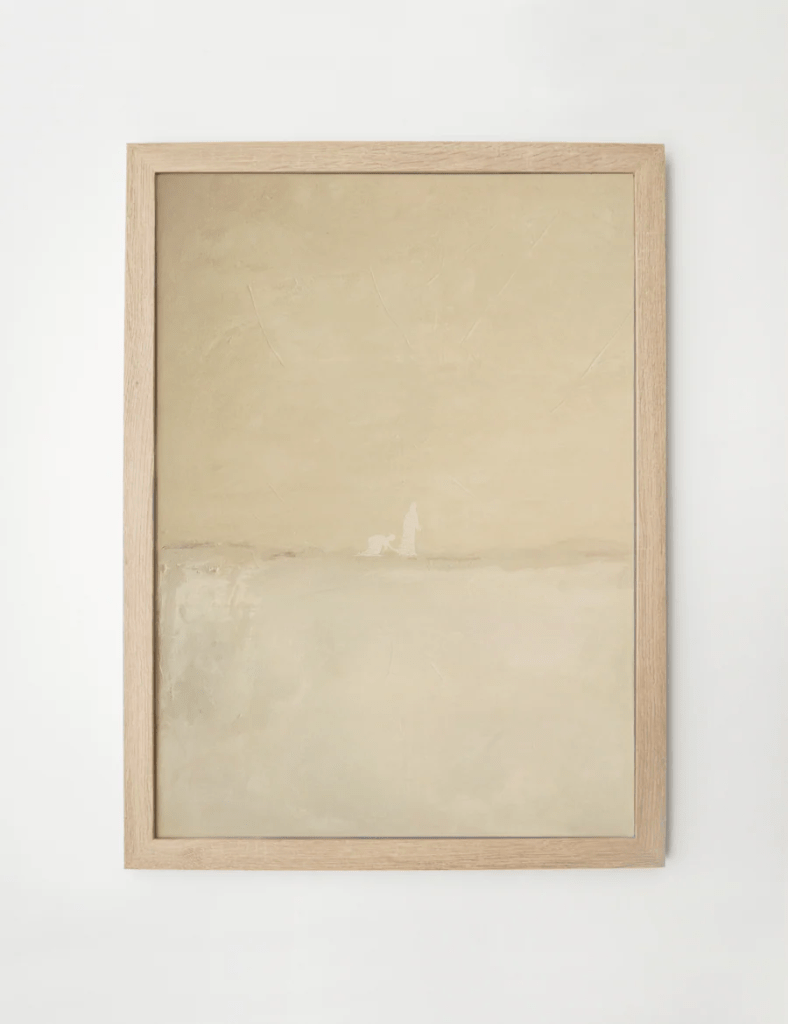
“Jesus Heals the Bleeding Woman” by Matt Joseph
This painting is very dear to me, and it hangs on the walls of our current home. Beyond my love for minimalism, balanced with eclectic touches and a careful attention to detail and color, Matt’s depiction of the story of Jesus healing the bleeding woman speaks deeply to my heart. Often, in the greatest turmoil of our lives—when everything feels empty—all we need is for that space to be filled with the presence of God. That is exactly what I feel when I look at this painting.
Verses of the day:
“The thief comes only to steal and kill and destroy; I have come that they may have life, and have it to the full.”
John 10:10
“Then Jesus declared, “I am the bread of life. Whoever comes to me will never go hungry, and whoever believes in me will never be thirsty.”
John 6:35
Thoughts of the day:
“I don’t know if I would be who I am today if I’d grown up in a different country. In our house the news was always on, the newspaper was always on the dining room table and my parents had a real thirst for politics, and that’s how I grew up. A lot of my American friends grew up in a different way, and because of what’s happened in America in recent years, they are asking questions, playing catch-up. But I can understand that, because they were living in a country that was comfy and cozy. I wasn’t. I want to know what is going on. I have an interest in world politics–how can you not when you live on this Earth? I’m just flabbergasted when people don’t give a ****.” — Charlize Theron
“I have a lot of things I should probably sort out in therapy about my relationship with my country. Because it’s affected me way more than I’ve ever acknowledged. And it was only when I got older that I started realizing that I had a lot of anger; there was a lot of unresolved stuff—apartheid, health care, AIDS, poverty—that still very much affects me.
It makes you realize that the circumstances of your formative years, it leaves a real scar—it marks you. It’s the one thing that gets me really angry, really emotional. It’s a lot of f—ing suffering, and unnecessary suffering.” — Charlize Theron
Excerpt of the Day:

The Body Keeps the Score: Brain, Mind, and Body in the Healing of Trauma, Bessel van der Kolk M.D., 2014

 Zebras and Magpies
Leave a comment