


“Are you content with the content?”
That question hit me just before bed, right after I gave up on sleeping early and scrolled through Instagram for fifteen minutes. Surprisingly, I enjoyed what I saw: one video featured a now-famous duo teaching advanced geography; another showed a Christian family paying off the debt of a persecuted Pakistani Christian family who’d been enslaved for over twenty-five years. It’s old news—but new to me. Kind of. I knew slavery still exists in 2025 (read that again), but I didn’t know about this story.
I wasn’t into the mood of learning about more suffering in the world, but I took this as an opportunity to be grateful for everything — except the fact that before these two videos, I watched the “peak of humanity” reel where a couple smashes their giant wedding cake and the bride walks all over it with her high heels; but hey, as Sheila* said in the comments: “It’s their money, so they will spend it like they want.” Scientists say we have over 3000 different brain cells! But Sheila knows better. Go get ’em, Sheila!
I turned off my wi-fi and decided I won’t allow my mind to wander from topic to topic. I did the right thing. After nights of poor sleep, I drowned in my pillow and slept for nine hours. In the morning, I didn’t reach for my phone but my thoughts did reach the topic that touched every bit of my consciousness: modern slavery.
According to the latest Report on Forced Labor and Forced Marriage, there are 50 million people around the world forced into slavery in various forms. That’s roughly the population of Spain, and we’re talking about cases based on known statistics. How many more people are stuck in slavery, without us knowing… and worse, without them knowing that they are slaves?
One of the latest views stuck in my head was seeing a colleague at one of my previous workplaces standing next to a wall, his worried face turned toward the floor, intermittently bumping his head against the doorframe.
Half an hour before this I witnessed mobbing; he was yelled at by his superior in front of everyone because he didn’t finish his task. Although he tried to explain calmly that he didn’t do it because he lacked information, his superior continued yelling and throwing offensive, vulgar words at him. The whole sector stood in silence—including me. I know I could’ve done something, but I chose not to, because it would’ve made things worse. His superior lost control—of themselves and their subordinates. And I lost all respect—for them, the managers, and the company.
When I saw my colleague in that condition, I asked if he “was OK.” It was more than obvious that he wasn’t, but I didn’t want to pressure him—yet I wanted to let him know he had someone to talk to. He was too distracted, still in shock and I could see the anger and sadness on his face. He was humiliated. I believe he had so much to say, but chose silence. We both went back to our desks and eventually left the company.
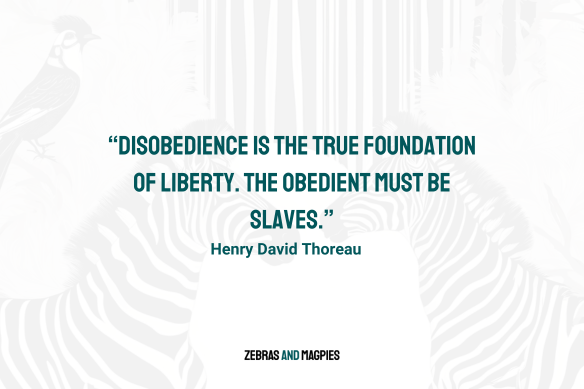
I met so many great people there—full of knowledge, ideas, creativity and innovative approach. Their weakness was one, but serious—obedience. They strictly followed the dictatorial way of work, the enforced unanimity. Led under pressure and blinded by fear.
Not everyone had it bad—or at least they knew how to hide the anxiety and focus on what led them to endure, a little bit longer. A key word: endure.
According to the Meriam-Webster dictionary, to endure means to remain firm under suffering or misfortune without yielding or to continue in the same state.
I very quickly decided I don’t want to endure this kind of toxic environment. If you still need a clearer picture of what I’m talking about, think of the first twenty minutes of Charlie Chaplin’s Modern Times.
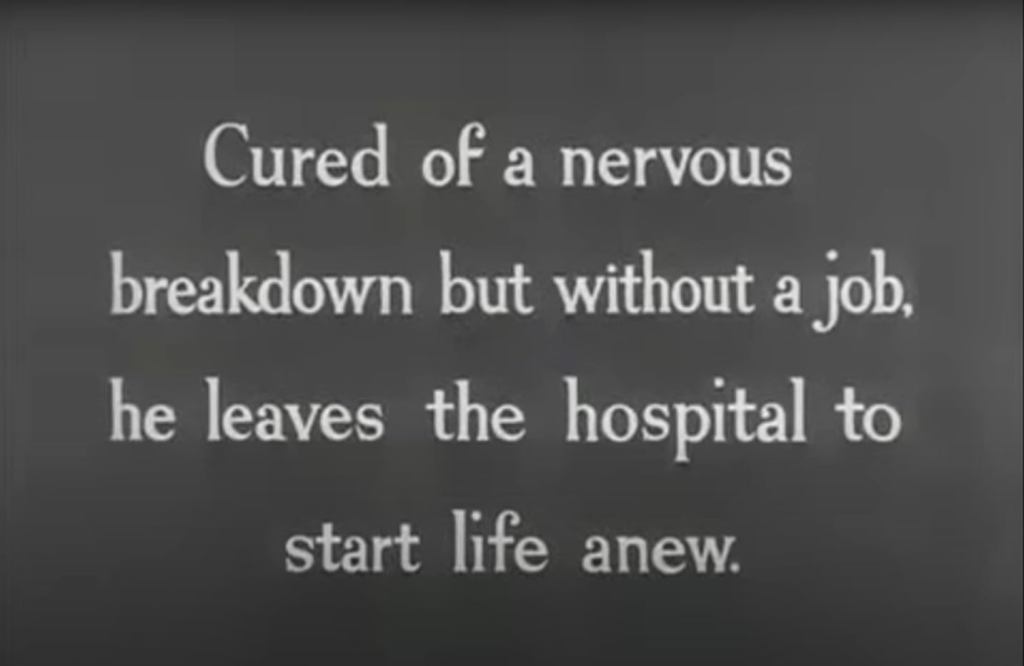


None of us chased other colleagues with wrenches, but a lot of us were at the edge of a mental breakdown or heading towards one. Before I left, I refused to follow the crowd walking to the mental slaughterhouse. At moments, it cost me my peace: my superiors tried to intimidate me, to drive me to the wall, and shake my confidence. The more they pushed, the more I resisted—and what was supposed to become my fear became theirs; they got scared because I wasn’t scared.
What most of them couldn’t understand is that my day began and ended with God’s words:
“It is for freedom that Christ has set us free. Stand firm, then, and do not let yourselves be burdened again by a yoke of slavery.”
Galatians 5:1
Slavery has a few definitions. In its rawest form, it represents the practice or institution of holding people as chattel involuntarily and under threat of violence.
There are three more meanings: a situation or practice in which people are coerced to work under conditions that are exploitative, a condition of having to work very hard without proper remuneration and appreciation or excessive dependence on or devotion to something.
In short, I refuse to be a slave—except to my cats’ meowing as I appreciate my peace, and to my curiosity in nature (even if that means giving my mom the prophetic acknowledgement—she says I’ll end up like Steve Irvin).
In all seriousness, I refuse to bow down to superiors-by-title who decided to walk over me because it feeds their wildest dreams—to get revenge for that time when they waited in line and someone else bought the last 2+1 toothpaste package. Go to aisle two for that, Brian and Brenda, and let me be.
What I think about more and more is whether people simply don’t want to see a serious part of the reality we live in: that we are voluntarily participating in modern slavery (or forms of it).
We accept “occasional” exploitation such as unpaid or mandatory overtime (that lasts longer than an iron pan), overworking in understaffed corporations or small businesses, staying silent—not just when it’s better to, but also when a probably neurotic person is yelling at us with zero respect. We’re intimidated, manipulated, forced to think like everyone else and be robbed of our authentic ways of working and thinking.
How can “There is worse” be an excuse to continue tolerating humiliation? What’s the purpose of it?
There are common reasons people stay “just a little bit more”—waiting or looking for another opportunity, the current workplace being the only source of desperately needed income, low self-esteem, and fear of starting from scratch somewhere new.
However, there is a threshold of tolerance and common sense, which I call dignity. So, if one’s dignity is walked all over and they have the financial conditions to leave a workplace, yet they remain trapped in a highly unhealthy professional relationship with their employee or organization—what could possibly be the excuse?
According to Prof. Aaron A. Buchko, there is a factor that plays an important role in why employees don’t leave abusive organizations, and that is psychological entrapment.
In his co-written article Why do good employees stay in bad organizations, professor Buchko elaborates:
“Psychological entrapment, though, refers specifically to a process whereby individuals escalate the commitment to a previously chosen course of action in order to justify prior investments (Brockner & Rubin, 1985). Psychological entrapment is rooted in the concept that people feel the need to justify the time, effort, money, or other resources spent in pursuit of some goal and will continue to pursue that goal because giving up would mean admitting that all those investments had been wasted.”
He then shares a simple truth:
“Employees face a clear threat of psychological entrapment when working in an abusive organization; paradoxically, the longer the employment, the greater the sense of entrapment.”
Not once, but three times, I learned the hard way that the longer you stay, the harder it gets to walk away. You don’t even notice when the line between discomfort and dysfunction has blurred—when endurance quietly turns into entrapment. That’s why I made myself a promise: next time I smell smoke, I won’t wait for the fire.
So, when another company came along with romantic promises—flexible hours, supportive management, all the buzzwords—I listened closely. But behind the smiles and the attempt to sell a pitch to a sales pitcher who’s learned how to get out of the fire before, I recognized the market booth trying to sell me snake oil.
This time, I didn’t stay to see how the story ended. I left before I had to start healing and discussing my freedom rights.
Because if freedom means anything, it’s this: walking away with your dignity intact—even when it costs you. Especially when it costs you.
And to anyone out there stuck in a toxic job believing things will get better because HR said so—take it from me: you’re not tied with chains. You can move. Unless your contract says otherwise… in which case, go to HR and read them the paragraph about Mental Health Appreciation Day. Then tell them that from now on, you’re planning on appreciating all days as mental health days. Or better yet, run faster than Brian and Brenda racing to aisle two for that last discounted toothpaste.
Song of the day: Gained the World – Morcheeba
Lyrics of the day: No Hoard of Value – Jinjer
Excerpt:
Hey, caveman!
When did you see the sky last time?
How deep is that treasure you are told to find?
The reflect of what you feel, what you breathe
Is that what you really are?
Caveman!
Hey, caveman, what’s your life so far?
Movie of the day: Modern Times (1936) – Charlie Chaplin
Quote of the day:
“When others asked the truth of me, I was convinced it was not the truth they wanted, but an illusion they could bear to live with.” ― Anaïs Nin
I don’t know Sheila, Brenda, or Brian personally—but I’ve definitely met their vibes. If you see a little of yourself in them, the mirror’s up—do with it what you will.

 Zebras and Magpies
Leave a comment