


Some days, writing looks like this: I pick through quotes, scroll through old documents with unfinished drafts, and read from my journals to find a topic. There are so many things living in a writer’s mind that sometimes, selecting just one is impossible. We write even on days when we’re not writing. We live our own lives—and other people’s.
The thing is, we don’t have as much “storage” as we’d love to; eventually, we let go of some lives or stories we’ve testified to and choose to stick to the ones that will resonate—both with us and, hopefully, the reader.
These past few days, I’ve focused mostly on getting closer to God. I fasted from certain foods, but I also fasted from content. I didn’t watch videos. I didn’t read many messages, news headlines, or research papers. I did not write.
The guilt of not knitting with words throughout the week left me drained. Life’s been throwing bricks and rocks, and I felt guilty for not writing a new text. Because the readers are waiting. Because I might get used to skipping weeks and only write when I feel like it. Because I—a writer—chose not to write.
Then, like a gong sounding through silence, it hit me—the title of my very own essay: Stop feeling guilty about everything.
Did it help? Not really. It just intensified my urge to create—to spill out emotion, arguments, ideas, and words. Until I stepped into nature. Then everything made sense. The fasting, the content deprivation, the purposeful news avoidance—each led to something beautiful: a full reservoir of creative fuel.
On Easter weekend, we went with friends to the village and spent time in nature. We played badminton, board games, and laughed genuinely, like we hadn’t in a long time. All the weight, all the noise pollution, all the weltschmerz and worry that life had been throwing at us disappeared the moment we put our feet into the kayaks.
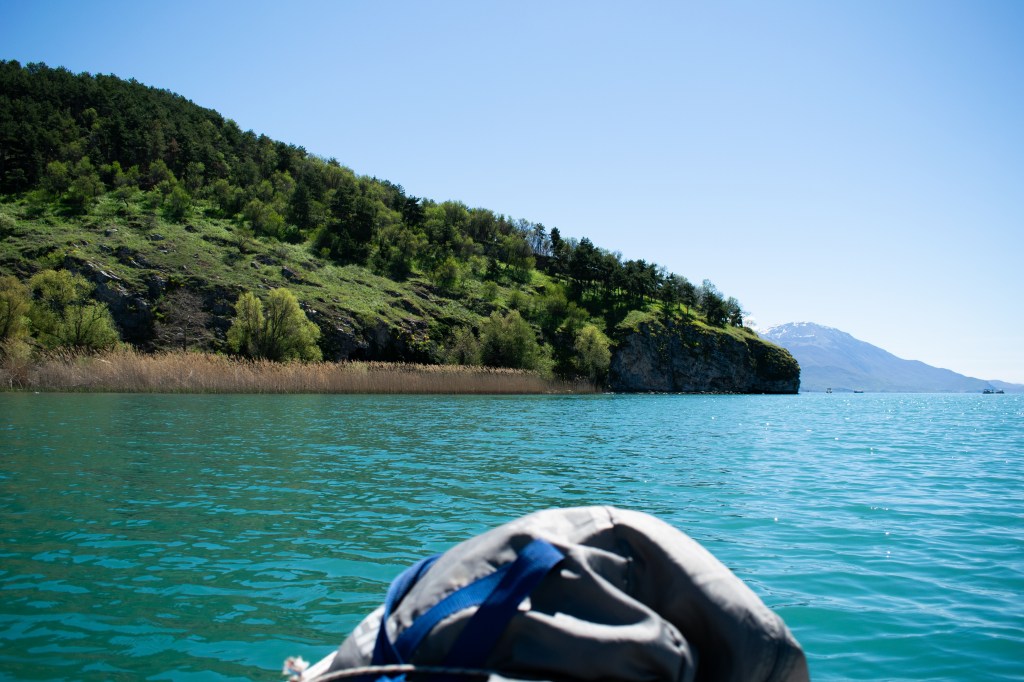
God rose, and with Him, we did too. He gifted us perfect weather. We left the shore and let the water and greenery guide us into quiet, complete peace.

I could write pages about that experience—one more story in the drawer with thousands of my adventures—but my mind is drifting elsewhere as I write: to the weight of being a writer.
As soon as I packed up and put everything in the car for the road back home, the same overwhelming thought returned: I haven’t written anything in ten days.
By “anything,” I mean I haven’t sat for long hours, digging deep into research papers, books, podcasts, and documentaries. But then again—
Isn’t observing a form of writing?
Isn’t listening carefully, being present, supporting your family and friends, praying, preparing food intentionally, sitting still in nature and following a bird’s route—all part of gathering material for writing?
Recently, my friend asked me if I have a posting schedule. She asked me with a genuine and pure heart, showing interest in what I do. And I responded honestly: I try to. I really try. Seemingly an unimportant chat, but it left me thinking about deadlines, writers and pressure.
As a journalist and copywriter by profession, I’m more than used to hurrying and completing tasks in unreasonably tight time frames. I’m against it, but I’ve learned to go with the flow … or flock. But this is my writing and my time. I’m not in an agency. There are no clients, meetings and projects. Heck, I’m propagating slowing down on my blog, so why would I hurry—because the world told me so?
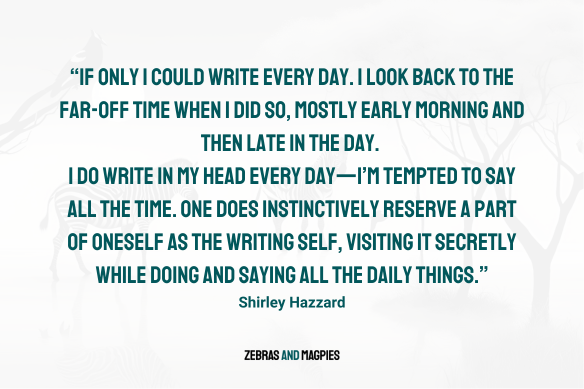
That’s the thing about us writers—we usually go against the world. Not out of arrogance or spite, but of pure necessity. I cannot write if I’m part of the flock. I can join it, parade with it, be put in corners with it, stand with it—but I can never be it.
I, a writer, leave my soul on the other side.
How can I write about the world if I don’t stand opposite to its views, currents and tides? I’ve lived long enough to have learned and understood its ways, and if I want to describe it, I have to get away from its comfort. Writers live on the line between black and white. We are the zebras; running wild and telling stories of the freedom so many dream about—yet try to take from us—convincing us that we are just black sheep with defects in character.
For some, we are magpies—the bringers of bad news to those who can’t stand reality, and collectors of shiny things to those who dare to see further; who learn that we can both grieve and play.
Writing is a never-ending endurance test. It teaches you obedience, suffering, patience and the brevity of guilt.
The more you write, the more you realize there’s no going back. There’s always something to see, to feel, to bear witness to.
You don’t choose to be a writer; it comes to you. You can run away from it, hide in other professions, milestones and achievements, but it will eventually find you again. Open a window on a sunny day, and you’ll see: the stories are still out there, waiting.
When you come back to it, what weighs heavy is not the lost time but the lack of it—to tell all the stories, to stand against injustice, to try to bring people back to empathy, to write about homelessness, to save a dog’s life, to tell the world about Congo’s kids, to celebrate God, to teach resilience, to share a cause, to teach about grief and suicide prevention, to prevent bullying, to share a good recipe and life’s simple wisdom.
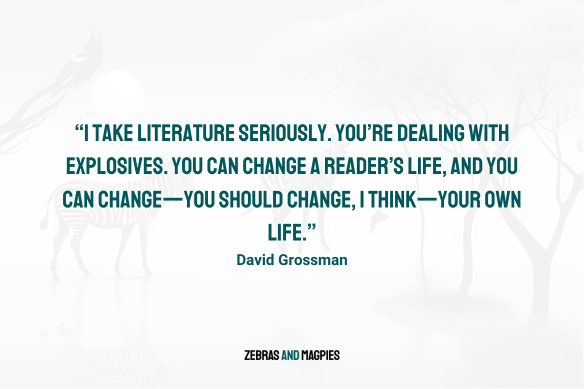
Writing is knowing that you don’t have enough time, yet you can have all the time—if you are brave enough to turn your back to the world and love it the way you know best—with words, until the very end.
Song of the day: Who Is Gonna Be the One – Jinjer
Gentle note: This song is not as caring and as gentle as this note but carries a strong message. So, here’s an alternative treat for you if you’re not into heavy music: Who I Am – Victory Boyd
Watch of the day: Why Toni Morrison Keeps Writing
Place of the Day: Giunti Odeon, a bookstore-cinema in Florence, Italy

 Zebras and Magpies
Leave a comment