


I’ve always been deeply moved by Alice in Chains and their music—especially Layne’s vocals, which, beyond their radiant sound and at times gravelly tone, sang so loudly of the wish to be seen. I find Layne’s and Jerry’s lyrics profoundly poetic. They testify to so many lives lived, abandoned too soon, ironically forgotten and only later remembered.
Although considered a love song, to me, Down in a Hole, is a cry for help. Maybe because I can feel Layne’s inner struggle when he sings it, or maybe, because deep down, that’s what Jerry’s message was to the love of his life Courtney Clarke: I’m struggling.
Down in a hole and I don’t know if I can be saved
See my heart, I decorate it like a grave
Oh, you don’t understand who they thought I was supposed to be
Look at me now, a man who won’t let himself be.
Lately, one of my deceased friends has been on my mind a lot. He died of an overdose. We hadn’t seen each other since the summer of 2016, and to be honest, I ache when I remember how he looked the last time I saw him. Nick and I were coming back from a long night on a side gig, working as extras in a movie. After twelve hours on an overnight scene—where you mostly exist because the director told you to—we were trying to get back to reality, and I saw him.
Like a scene from Penelope Spheeris’s Suburbia, there he was, standing on the hot asphalt under the shade of the large tree in front of the cathedral. I can’t recall the exact weather; it was warm, not exactly a heatwave. Yet he—my dear, exhausted friend—was shaking uncontrollably, sweat running down his small, square face, his arms weakened.
He found the strength to show honest joy when he saw us. I had a knot in my stomach. I loved him dearly and couldn’t bear to see him like that, but the joy of seeing him after so long overwhelmed me and I hugged him as if I knew I would lose him soon.
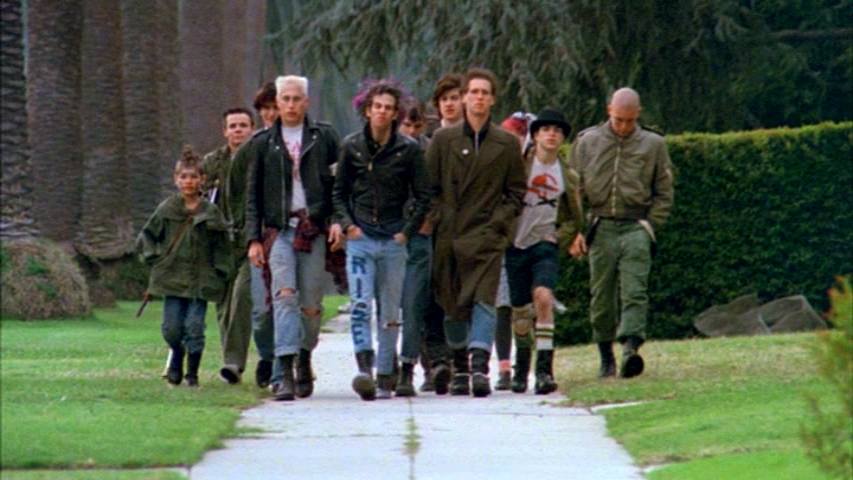
Suburbia (Penelope Spheeris, 1983)
His eyes were sparkly and tired, trying to stay focused. He was severely agitated but attempting to remain calm, as if to hide what I could see: most of his teeth were gone, his jaw reduced to the point of a skeleton model, and his arms were barely hanging from what was left of his body. He said he was waiting for a friend who, I guessed, was going to give him a strong dose of faulty peace.
It hurt more because, just a year before, he had gained weight and looked healthier than he had in years. He had left our hometown to work abroad, and when he came back after five months, he seemed stronger—trying, in his own way, to do better. He told me he was almost clean and that he had only been using weed and drinking beer occasionally.
I wanted so much to be there for him. Living in different cities, I barely saw him. He tried to leave again, but the Devil was quicker than his plans. He succumbed to his old habits, and the condition in which I last saw him only worsened.
A few years later, my sister told me he had overdosed. I didn’t see the Facebook mourning; I didn’t see public grief. I didn’t hear from people who knew him. Partly because he had committed crimes and been in prison; mostly because nobody seemed to care. Since the beginning, he had been abandoned by many. I know how many betrayed him—even the girlfriend who he’d forbade from trying drugs ended up cheating on him. To most people he was “the junkie.” To me, he was not a villain.
Lost in desperation, he lost his way and, in that downfall, hurt other sinners. But I will always remember him for two things: his respect for me, and his never-ending love for his little brother.
“I told him, sis—I told him I’d break both his arms if he ever reached for even a cigar. I told him he can’t smoke, can’t try weed or any other drug. If I ever hear he’s even thought of it, I’ll beat him.”
I know he was serious.
It wasn’t the gentlest love language I’ve heard, but it was proactive love. Because of that fierce protection, his little brother grew into a healthy, well-educated sportsman.
Seeing my friend slip away from the loose hands of a broken family and a corrupt town into the hands of the enemy wasn’t easy, but I am forever grateful that I have met him and have shared some of the lowest moments in his life, because he allowed me to see what others couldn’t see: that he did the best he could and that he didn’t die of an overdose but of abandonment.
If I only knew Jesus’s promising words like I know them now:
“Come to me, all you who are weary and burdened, and I will give you rest. Take my yoke upon you and learn from me, for I am gentle and humble in heart, and you will find rest for your souls. For my yoke is easy and my burden is light.”
Matthew 11:28-30
To my friend, whom I loved dearly and who, despite all the pain, always carried a vibrant smile.
And to anyone struggling with addiction: please know that there is someone who sees you—even if you cannot see Him.
“Even if my father and mother abandon me, the LORD will hold me close.”
Psalm 27:10
Song of the Day: Alice In Chains – Down in a Hole
Hope of the Day: Mountain People Worship
Watch of the Day: Brian Head Welch Testimony
Movie of the Day: Suburbia by Penelope Spheeris
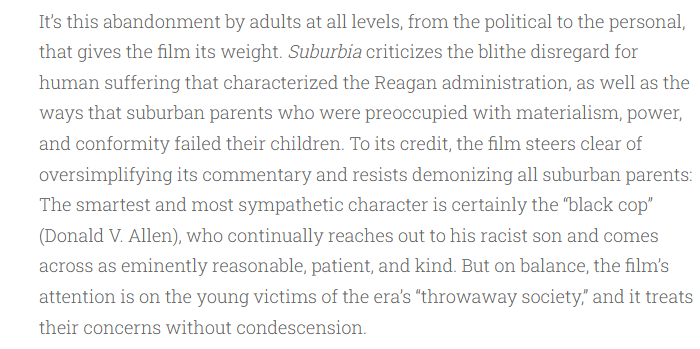
Film review by Sue Lonac, 2019
 Zebras and Magpies
Leave a comment